
The Cholas
India’s Forgotten Global Empire That Conquered Seas, Sculpted Time & Shaped the World

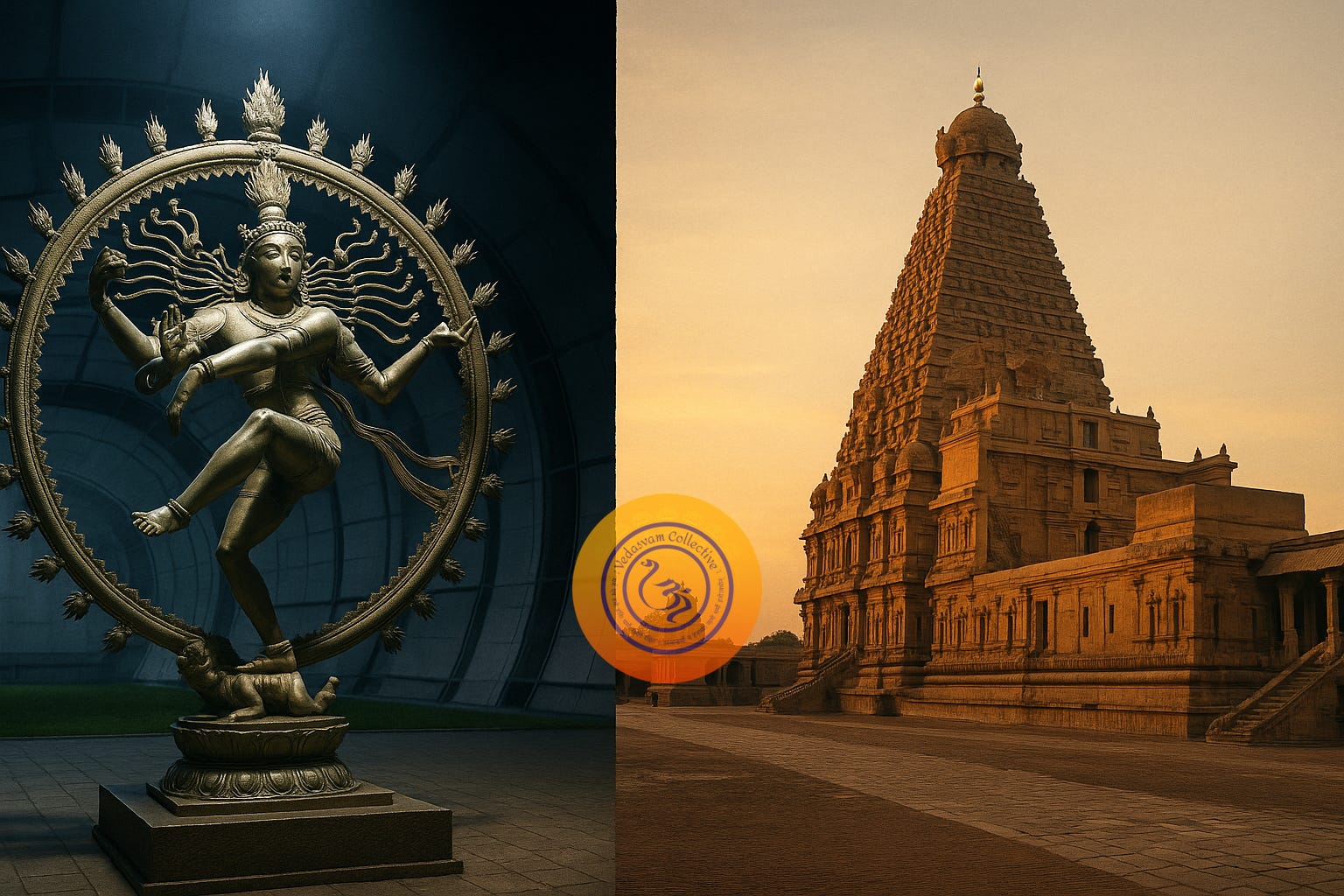
Imagine this: you're walking through CERN in Switzerland—the world’s most advanced physics lab—and you see it: a bronze sculpture of a dancing god. The same one you’ll find at the MET in New York and the British Museum in London.
That’s Nataraja—the cosmic dancer—and its origins lie not in modern art studios, but in a medieval Indian empire barely mentioned in our schoolbooks.
That empire? The Cholas.
We learn about the Mughals in eight textbook chapters. The Cholas get a barely a chapter, sometimes worse - they are limited to a footnote. That’s not just oversight—it’s erasure.
Let’s change that.
From Local Chiefs to Maritime Titans
Starting as local chieftains in the Kaveri delta, the Cholas understood something timeless: true power doesn’t just come from land, but from the flow of trade, ideas, and culture.
Vijayalaya Chola seized Thanjavur in 850 CE—a gateway to agriculture, sea trade, and political dominance. His descendants would go on to change the face of Asia.
Rajaraja Chola: The Empire Builder
Rajaraja I (985–1014 CE) built an empire that spanned from Bengal to Sri Lanka—not by brute force, but through integration and vision.
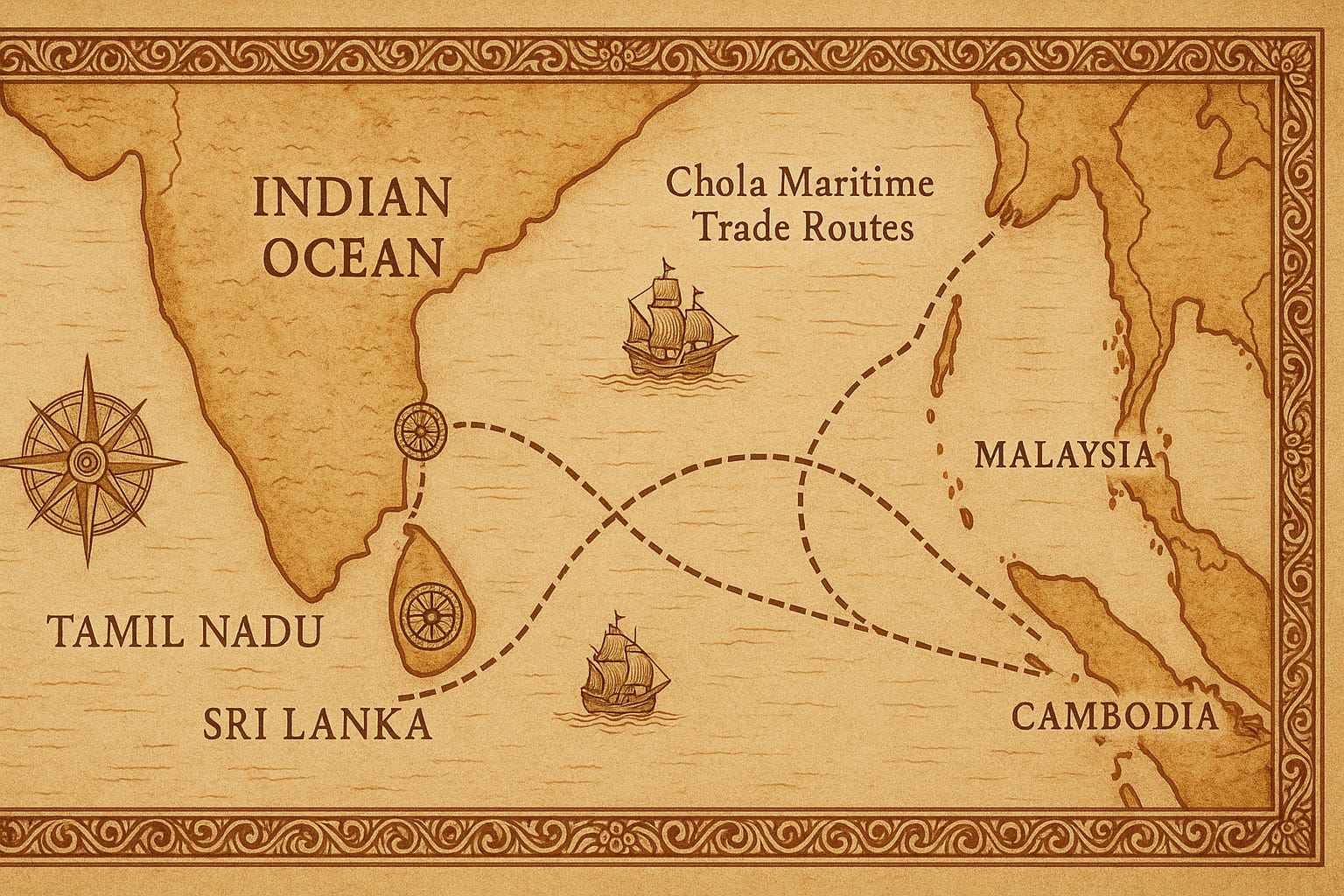
He took naval knowledge from conquered kingdoms and created one of the greatest maritime empires in history. He saw the Indian Ocean as a trade highway—and whoever ruled it, ruled the world.
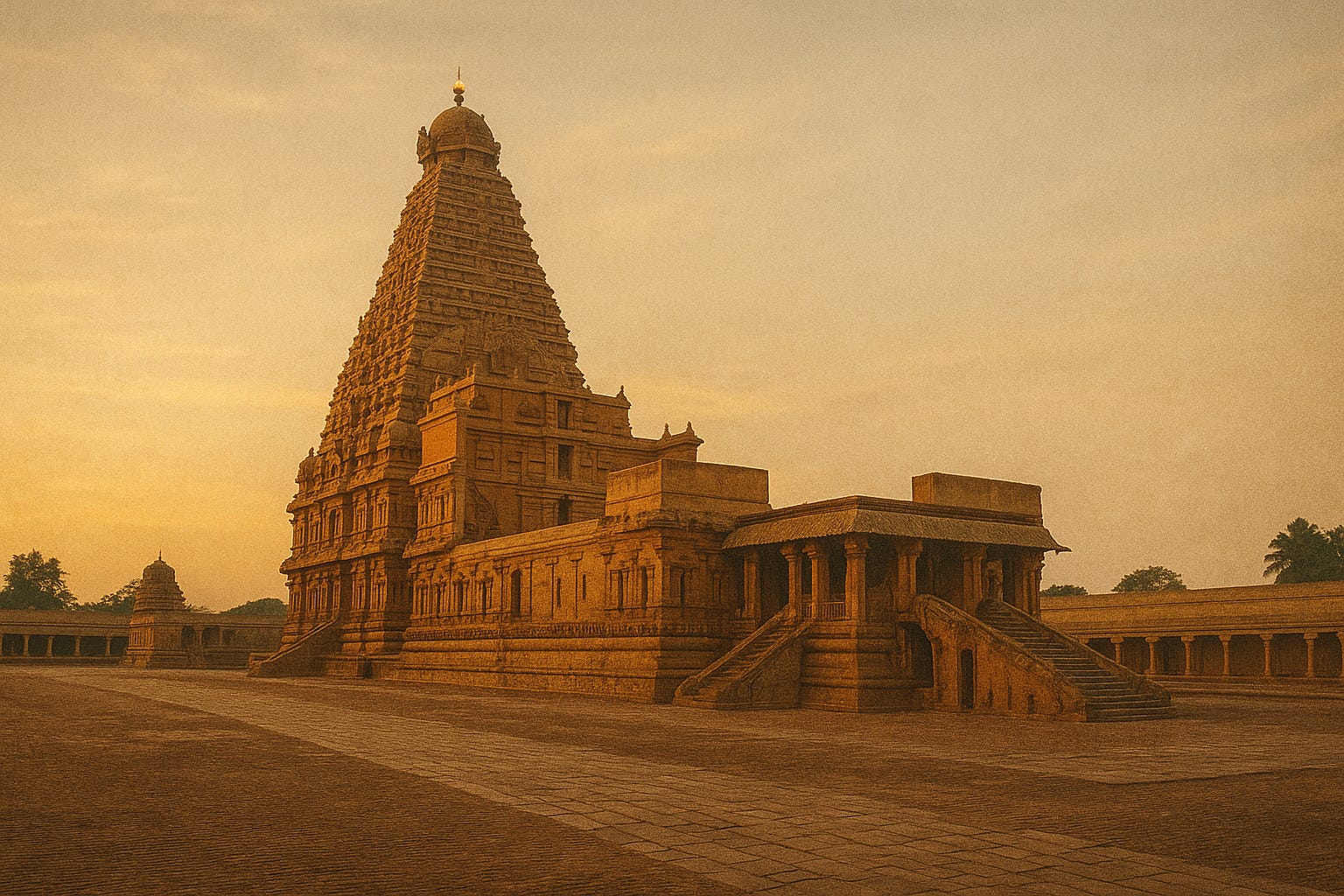
He also built Brihadeeswara Temple—topping it with an 80-ton granite block hauled up a 6 km ramp. That’s not just architecture—it’s a civilizational statement.
“This is what the Cholas can accomplish.”
Rajendra Chola: Beyond Conquest, Into the Ocean
Rajendra Chola, his son, was even more daring.
He led a pan-Indian military campaign and ceremonially brought back Ganges water to his new capital.
Then he looked east.
He sent naval fleets 3,000 km across the ocean, capturing ports in Indonesia, Malaysia, Cambodia, and Thailand. These weren’t raids—this was strategic trade dominance.
The Cholas didn’t just control the seas—they shaped global commerce a thousand years ago.
Soft Power Superpower: The Cultural Cholas
By the time Kulottunga Chola I ruled, the Cholas had evolved into a multicultural civilization.
Tamil merchants, Khmer kings, and Javanese rulers all shared ideas, art, and architecture. The Cholas introduced standardized currency, commercial laws, and trade guilds.
This was globalization before the term existed.
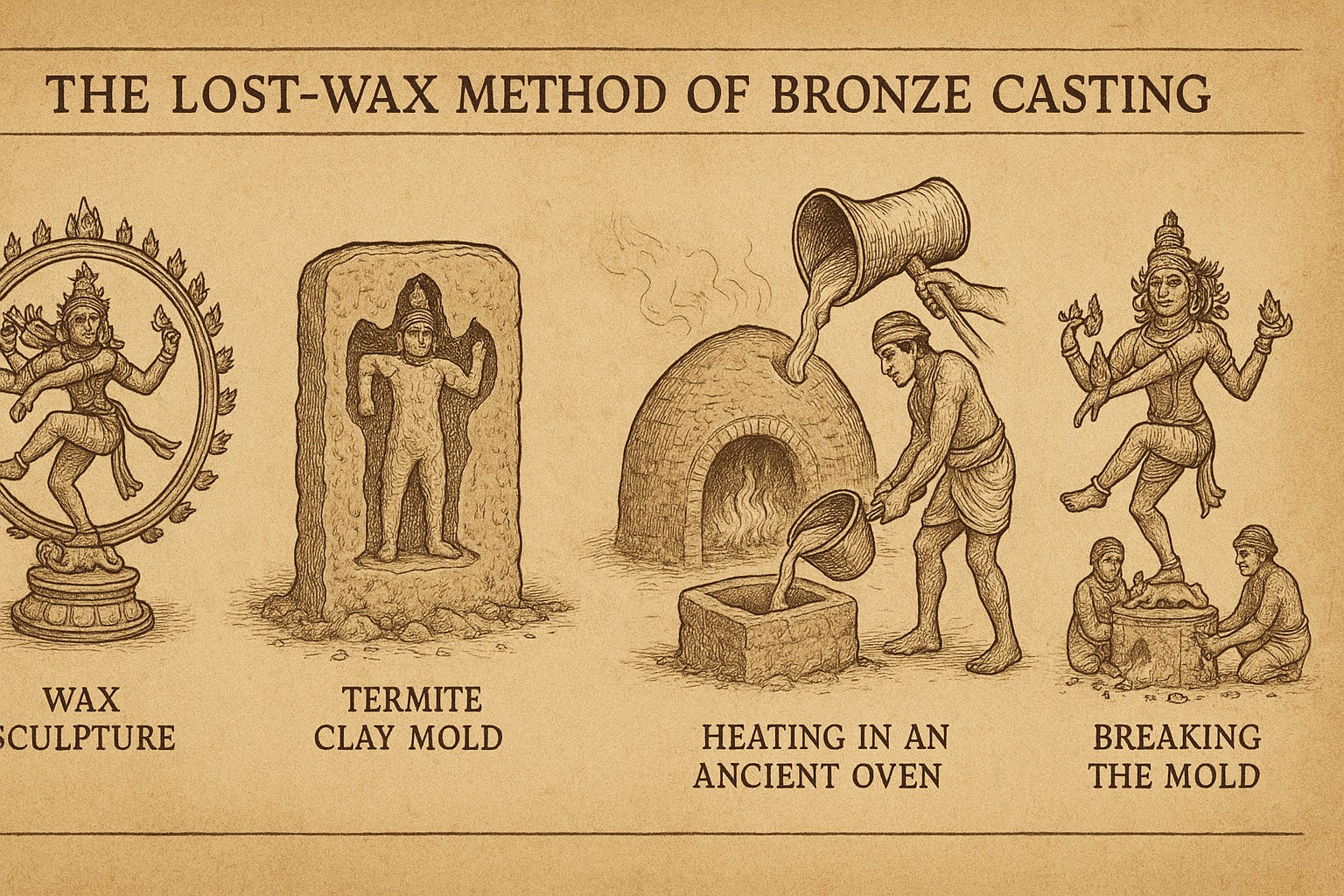
They also perfected the lost-wax bronze casting method to create divine masterpieces like Nataraja. Each sculpture was a blend of spiritual philosophy, artistic genius, and metallurgical science.
Why This Still Matters
The Cholas built not just temples—but trust.
Not just navies—but networks.
Not just art—but identity.
In today's fragmented world, their story reminds us of what’s possible:
🌍 Cultural bridges
💡 Economic foresight
💖 Sustainable power through prosperity
The Tragedy of Erasure
Why aren’t we taught this in full?
Why don’t Indian children grow up hearing about Rajaraja and Rajendra the way they hear about Akbar or Shah Jahan?
Is it because temples don’t advertise their builders? Or because bronze doesn’t age as dramatically as marble?
It’s time to fix that.
Let’s talk about this. Let’s reclaim the Chola story—not as nostalgia, but as fuel for the future.
Share this if it moved you. Let’s rewrite what we celebrate.